
CASE STUDY 04 / 04
Engineering Evaluation System for AI Tools
A repeatable evaluation system for comparing AI tools and models against fixed tasks, criteria and evidence rather than demos or subjective impressions.
This case separates the implemented structure, my personal contribution and the boundary of what can be shown publicly.
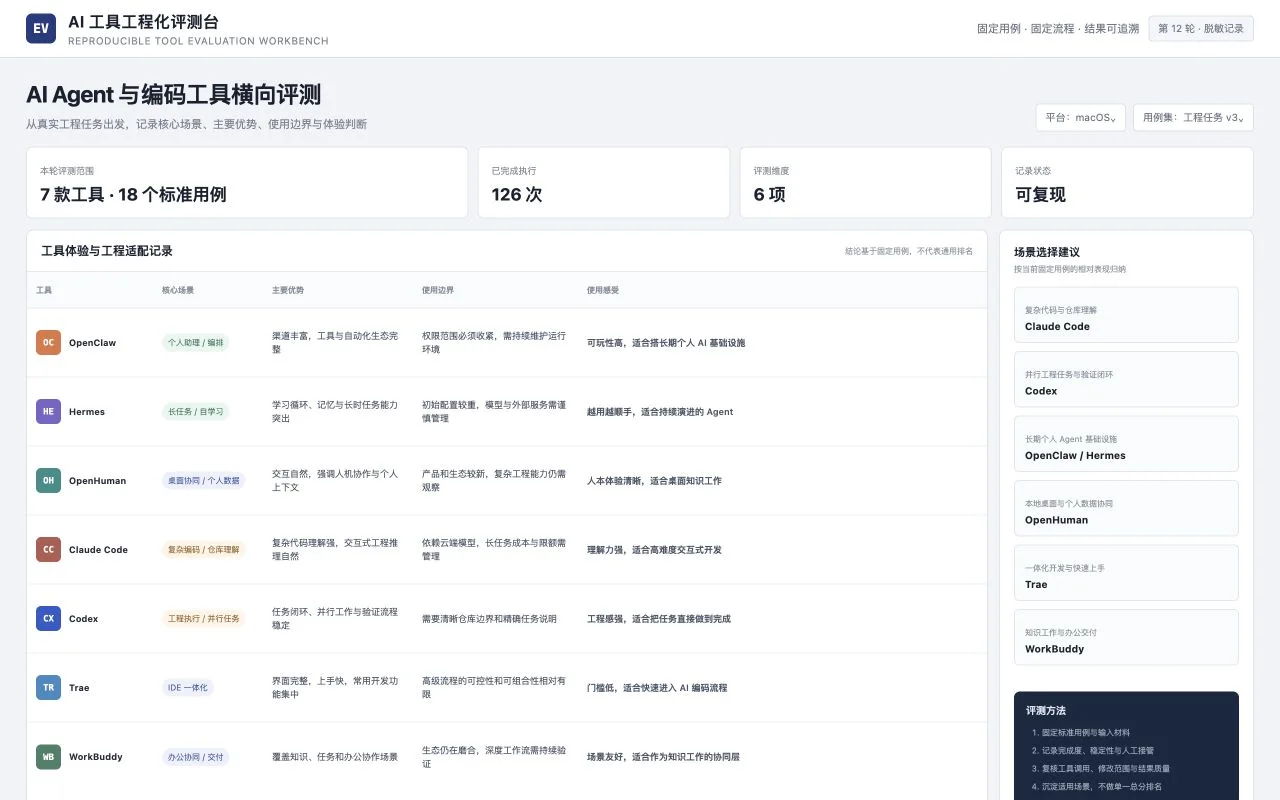 Anonymized reconstruction
 01 System Narrative
Problem, structure and delivery.
Operating problem
AI tools change quickly and marketing demonstrations hide the gap between “works once” and “works reliably.” Without a consistent method, selection becomes subjective and difficult to reproduce.
Delivery path
Derived fixed tasks and dimensions from real workflows, changed only the tool under test, and recorded both successful behavior and failure boundaries in a versioned structure.
System structure
The system combines a fixed task set, assessment dimensions and a versioned record template. Each run preserves the workflow and evidence format so results remain comparable.
02 Decision Record
The trade-off behind the interface.
- Constraint
- Tools changed quickly, marketing noise was high, subjective impressions were not reproducible, and public leaderboards did not represent reliability or integration cost in real engineering work.
- Alternatives considered
-
- 01 Follow popularity and anecdotal recommendations
- 02 Use public leaderboards alone
- 03 Evaluate fixed scenarios with stable dimensions and versioned records
- Why this choice
- Built a standard task set from real work, fixed the process and dimensions, changed only the tool under test, and recorded both failure boundaries and appropriate contexts.
- My contribution
- Designed the method, tasks, record format and comparison dimensions, ran the evaluations, and separated public observations from personal judgment and unverified conclusions.
- Result and reuse value
- Turned tool preference into a traceable selection process that eliminates poor workflow fits earlier and preserves changes across versions.
- Public evidence boundary
- The public interface is reconstructed from the actual evaluation dimensions. Displayed scores illustrate the record structure and are not a published benchmark or third-party performance claim.
03 Impact
What remained after delivery.
- Replaced subjective impressions with reproducible evaluation
- Established reusable benchmark tasks and evidence records
- Exposed tool boundaries and appropriate operating contexts
- Reduced time spent testing unsuitable tools
Next Case
Contract Profitability Management System